A practical indie game marketing guide to Instagram ranking signals, Reels, carousels, captions, timing, profiles, and metrics for clearer reach.

A systems guide for indie game marketing: clearer signals, stronger creative, cleaner experiments.
Most indie teams treat Instagram like a slot machine.
Post a Reel. Hope it lands. Blame the algorithm when it does not.
While building Seedfolk, I started treating Instagram less like a mystery and more like a design system: inputs, signals, feedback loops, and iteration. The useful question is not “How do I beat the algorithm?”
It is:
How do I make it obvious who should care?
That question changes the whole strategy. Instagram is not one algorithm to trick. It is a set of ranking and recommendation systems trying to predict what each person will find valuable, relevant, and worth acting on.
So the job of a small team is not to chase hacks. It is to send clearer signals.
For Seedfolk, that means every post should answer three things quickly:
- What is this game?
- Why should this person care?
- What should they do next?
Last updated: July 1, 2026. Instagram tools, specs, recommendation rules, and professional-account features change often. Treat this as a working model, then verify platform-specific details in-app before locking a workflow.
The useful mental model
Section titled “The useful mental model”Instagram does not run on one universal algorithm. Feed, Stories, Reels, Explore, Search, suggested accounts, ads, and recommendations all have different jobs. A post that works in one surface may fail in another.
A Reel can be excellent for discovery because a stranger can understand it quickly. A carousel can be stronger when the idea needs structure, comparison, or a reason to save. Stories are usually better for warm-audience feedback than cold reach. A profile is both a landing page and a classifier: it tells humans and systems what kind of account this is.
The practical model:
- Use Reels when you need non-follower discovery.
- Use carousels when you want saves, shares, and clear explanation.
- Use Stories when you want replies, polls, feedback, and relationship.
- Use feed images when one polished visual can carry the message.
- Use profile text, captions, alt text, keywords, and pinned posts to make your niche obvious.
The ranking systems do not read your intent. They read behavior.
What Instagram is probably measuring
Section titled “What Instagram is probably measuring”The exact weights change by person, post, and surface, so I do not build strategy around secret formulas. I build around observable signals.
Viewer signals: watch time, completion, rewatches, saves, shares, comments, profile taps, follows, searches, hides, skips, and reports.
Content signals: format, topic, caption language, hashtags, visual subject, audio, freshness, early response, originality, and recommendation eligibility.
Account signals: recent interactions, follower response, profile clarity, content consistency, Account Status, and whether you behave like a real participant in your niche.
Predicted actions: whether someone is likely to spend time, comment, save, share, tap the profile, follow, reply, DM, or click.
This is why generic content often underperforms even when it looks polished. If the first viewers do not behave like the target audience, the system has weak evidence for where to send the post next.
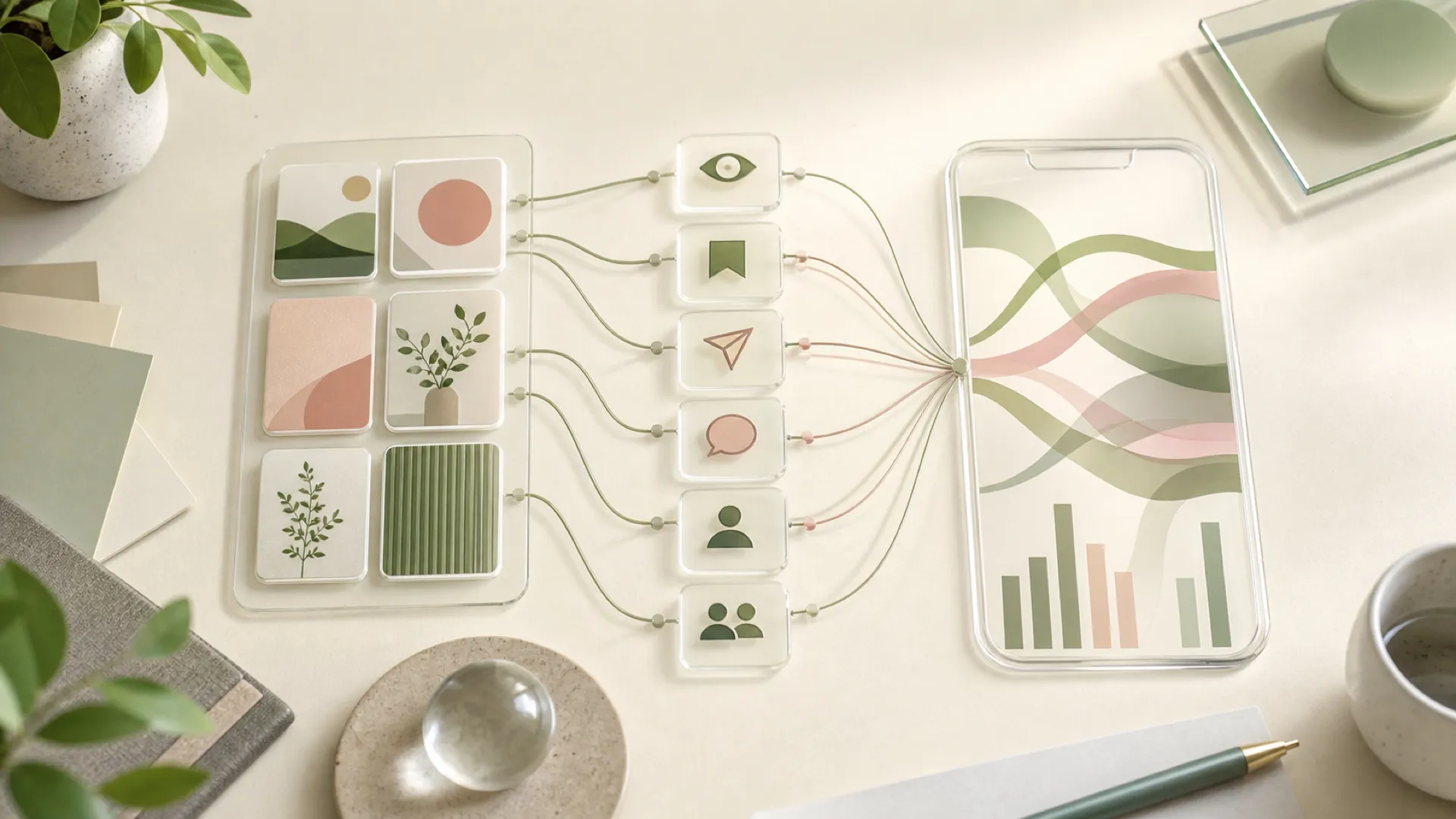
Instagram ranking is best understood as a signal system: content, viewer behavior, account history, and predicted next actions.
The format map
Section titled “The format map”Use the format that matches the job.
- Non-follower discovery: Reels. Watch retention, shares, profile taps, follows.
- Feature explanation: Carousels. Watch swipes, saves, shares, useful comments.
- Polished visual moment: Feed image or short Reel. Watch profile visits and shares.
- Warm-audience feedback: Stories. Watch replies, poll taps, sticker taps, DMs.
- High-intent conversion: Profile, pinned posts, and link destination. Watch link clicks, wishlists, playtest signups, community joins.
- Trust building: Devlogs, behind-the-scenes posts, playtest learnings, and follow-ups. Watch repeat engagement from the right people over time.
That is the cheat sheet. Not “post more.” Post the right shape for the signal you need.
Reels: make discovery readable
Section titled “Reels: make discovery readable”Reels are often one of the strongest non-follower discovery surfaces, but that does not mean every Reel deserves reach. A good Reel must communicate before the viewer has decided to care.
Build Reels around:
- A first frame that creates a visual question.
- Motion in the first second.
- One idea only.
- A subject that works with sound off.
- A loop, reveal, payoff, transformation, or surprise.
- Original media without third-party watermarks.
Production default: 9:16 vertical, 1080 x 1920, clean export, large center-safe text, and no slow logo-first intro.
For indie games, the best Reels are usually not trailers. They are readable loops:
- “What will this seed become?”
- “One crop reveal in 8 seconds.”
- “Before and after: old UI vs readable UI.”
- “Harvest -> request -> reward -> next seed.”
- “A bug became a better feature.”
Think in hooks:
Bad: “Here is an update from our cozy farming game.”
Better: “This mystery seed finally revealed itself.”
Best: show the unknown seed already changing on frame one.
Carousels: make the post worth saving
Section titled “Carousels: make the post worth saving”Carousels are for structured curiosity. They work when the viewer needs to swipe to understand the payoff.
Use carousels for dev notes, before-and-after comparisons, mini tutorials, feature breakdowns, patch highlights, playtest lessons, or a simple “how this system works” explanation.
Production default: 4:5 portrait, 1080 x 1350, consistent aspect ratio, one point per slide, and text large enough to read on a phone.
A reliable structure:
- Slide 1: visual hook.
- Slide 2: problem or question.
- Slides 3-5: proof, steps, screenshots, or comparison.
- Final slide: one CTA or discussion prompt.
A carousel should give people a reason to save or share. If it is only a static ad chopped into five slides, it is wasting the format.
Stories and feed images: relationship plus visual proof
Section titled “Stories and feed images: relationship plus visual proof”Stories are not usually the strongest cold-reach tool. They are relationship infrastructure.
Use Stories for polls, questions, quick progress receipts, behind-the-scenes notes, playtester feedback, naming decisions, and small design dilemmas.
For Seedfolk:
- “Which crop silhouette reads better?”
- “Should this UI say CropDex or Field Journal?”
- “Would you rather discover seeds by trading, foraging, or quests?”
- “This bug is weirdly charming. Keep it or fix it?”
Production default: 9:16 vertical, 1080 x 1920, important text away from top and bottom UI, and stickers used intentionally.
Feed images still matter when the image itself is strong: key art, crop reveals, cozy screenshots, milestones, polished comparison shots, and visual identity posts. My default is 4:5 portrait because it takes more mobile screen space than a square. Landscape only works when the composition genuinely needs width and the details survive on a phone.
Captions, hashtags, and profile clarity
Section titled “Captions, hashtags, and profile clarity”Captions cannot save weak media. They can clarify context, add personality, improve relevance, and guide the next action.
A useful structure:
- Line 1: hook or context.
- Lines 2-4: specific detail.
- CTA: one human next action.
- Hashtags: relevant labels.
Example:
Every seed in Seedfolk starts as a question.
This one revealed into a crop we can finally log in the CropDex.
Would you plant another mystery seed just to see what happens?
#CozyGames #IndieGameDev #FarmingSim #GameDev #WholesomeGames
Hashtags are classification hints, not magic distribution levers. Use a small relevant set: a few niche tags, a few community or content tags, and maybe one brand or campaign tag. If the tag does not describe the post, it is noise.
Your profile then has one job: remove confusion.
Optimize the handle, name field, bio, profile picture, link, pinned posts, highlights, and first nine grid posts. A stranger should understand what you make in three seconds.
Seedfolk bio pattern:
Seedfolk
Cozy botanical discovery game for PC
Every seed is a mystery
Devlog clips, playtest notes, and crop reveals
If your profile cannot tell a stranger what you make quickly, the algorithm is not your biggest problem.
Timing and engagement: run cleaner experiments
Section titled “Timing and engagement: run cleaner experiments”Generic “best time to post” charts are averages across many accounts, industries, and time zones. They are useful only as seed hypotheses.
Start with your audience timezone, account Insights, content type, and objective. Then test simple windows:
- Tuesday to Thursday late morning or early afternoon for feed posts and carousels.
- Weekday early evening for entertainment Reels.
- Weekend late morning for cozy gameplay content.
- Stories in clusters: morning prompt, midday poll, evening result.
Do not change format, hook, topic, caption, hashtags, and timing all at once. If every variable changes, you learn nothing.
Engagement is not “like random posts and pray.” It is participating in the right community graph.
Before posting, spend 10-15 minutes reading adjacent accounts, comments, hashtags, and community posts. Leave a few real comments where you can add something specific. Reply to recent comments and DMs. Check that your profile and pinned posts match the CTA.
After posting, be present if possible. Reply like a person. Share to Stories with a different angle. If a post gets traction, follow up within 24-48 hours with a related idea.
This is not superstition. It is relationship-building plus signal clarity.
Professional tools and recommendation risks
Section titled “Professional tools and recommendation risks”Use a professional account if you are serious about marketing. Business and Creator modes can expose Professional Dashboard, Insights, reach and engagement breakdowns, audience activity, contact buttons, ad tools, Meta Business Suite, and publishing workflows depending on eligibility.
Business accounts may have different music or audio access because of licensing. Creator accounts may have different creator-oriented tools. Choose based on whether you need brand tooling, ads, commercial features, API publishing, contact options, or broader audio access.
The practical rule:
If you cannot measure it, you cannot improve it.
But dashboards do not replace judgment.
Also remember: allowed is not the same as recommended. Instagram can allow a post to remain visible while reducing or removing its recommendation eligibility.
Watch for reposted watermarked clips, screenshot dumps with no transformation, low-resolution exports, misleading claims, overly shocking or policy-sensitive content, engagement bait, repetitive posts, AI-generated content with no authorship or clear point, niche mismatch, and Account Status issues.
Trends belong in the same category. They are ingredients, not strategy. Use the structure, not just the costume. The best trend use makes the product clearer. The worst trend use attracts the wrong audience faster.
The measurement stack
Section titled “The measurement stack”Do not measure every post by likes. Measure by intent.
- Discovery: non-follower reach, shares, profile visits, follows.
- Reels quality: watch time, completion rate, rewatches, retention drop-off.
- Educational value: saves, swipes, shares, comments that ask for more.
- Community: replies, poll taps, DMs, repeat Story viewers.
- Conversion: link clicks, wishlists, playtest signups, Discord joins, newsletter signups.
- Fatigue: hides, unfollows, muted Stories, lower completion, weaker repeat engagement.
Simple postmortem:
- What was the goal?
- What was the hook?
- What surface did we use?
- What signal did we expect?
- What actually happened?
- What should we test next?
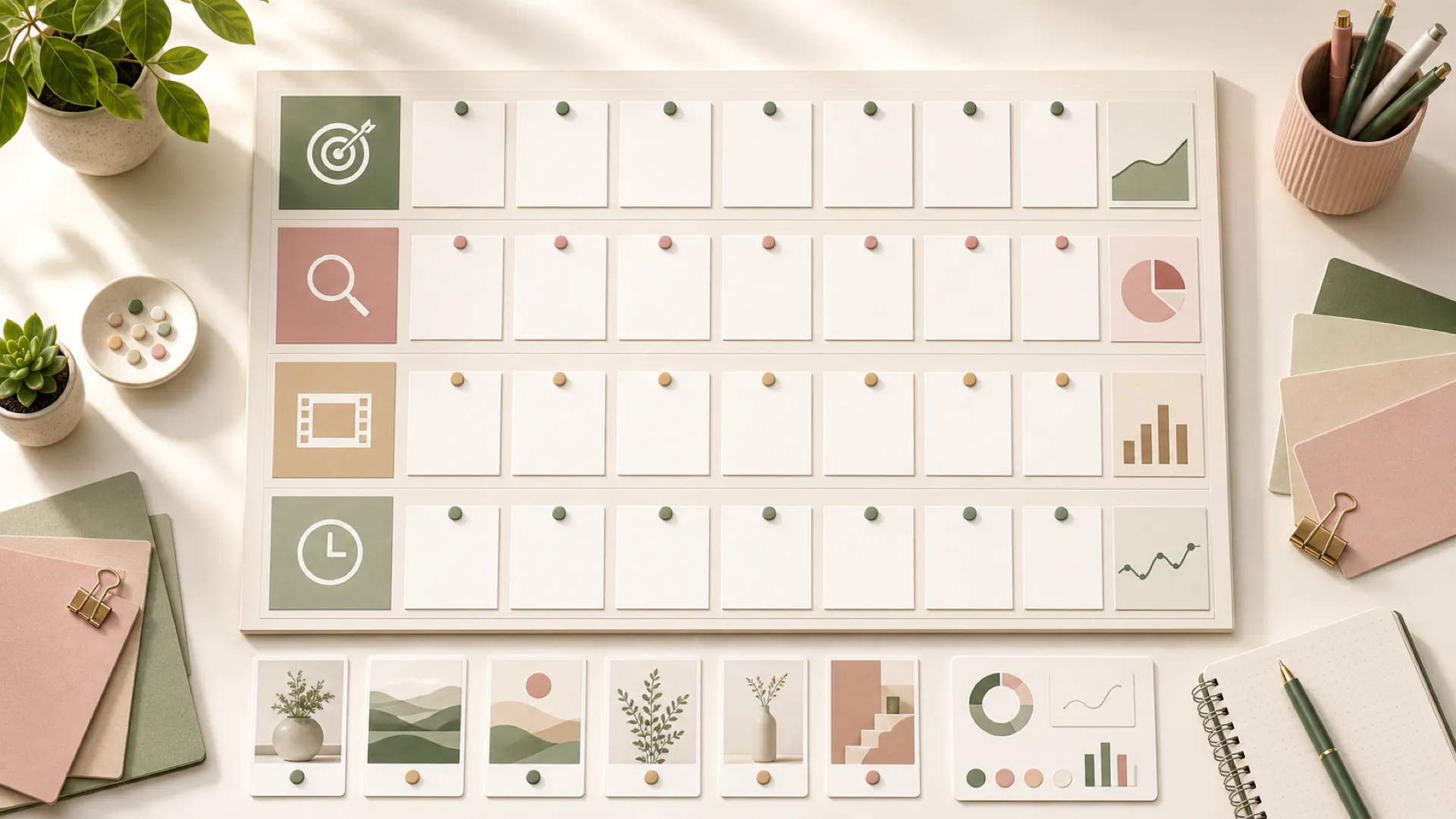
Run Instagram growth like a small experiment: baseline, hook tests, format tests, then timing and CTA tests.
A 30-day experiment plan
Section titled “A 30-day experiment plan”Week 1: baseline. Clean the profile bio, link, highlights, and pinned posts. Publish 2 Reels, 1 carousel, and 3-5 Story frames. Track every post manually.
Week 2: hook testing. Use the same topic with two different Reel hooks. One starts with motion. One starts with payoff. Compare watch time, completion, shares, and profile taps.
Week 3: format testing. Turn one Reel concept into a carousel. Turn one carousel idea into a Reel. Compare reach vs saves, non-follower reach vs follower engagement, and profile visits vs comments.
Week 4: timing and CTA testing. Repeat the best-performing surface. Test two time windows. Test a soft CTA vs a direct CTA. Follow up on the post with the clearest signal.
Decide the next month based on behavior, not vibes.
The operator’s checklist
Section titled “The operator’s checklist”Before posting:
- Is the format right for the goal?
- Is the first frame or first slide instantly readable?
- Is the media original or meaningfully transformed?
- Is it exported in the right ratio?
- Is text center-safe and large enough?
- Does it work muted?
- Does the caption clarify instead of rescue?
- Are the hashtags relevant?
- Is the CTA singular?
- Is the profile ready for visitors?
- Is the timing a testable hypothesis?
After posting:
- Reply to comments.
- Watch early retention and shares.
- Share to Stories with a fresh angle.
- Record metrics.
- Create a follow-up if the topic shows momentum.
- Kill what does not work.
- Repeat what works, but change the angle.
The real hack
Section titled “The real hack”The real hack is not tricking Instagram. It is making the platform’s job easy.
Make the topic obvious. Make the media native. Make the hook immediate. Make the post original. Make the profile clear. Make the next action human. Measure what happens. Change one variable. Try again.
That is the useful version of the hacker ethic applied to Instagram marketing: curiosity, instrumentation, iteration, and respect for the system you are learning.
For a small indie team, this is good news. You do not need to outspend the bigger studios. You need to become easier to understand, easier to recommend, and easier to care about.
That is the system I am building for Seedfolk.
Follow Seedfolk
Section titled “Follow Seedfolk”If you would like to follow Seedfolk’s development and updates:
- X: @seedfolkgame
- Instagram: @seedfolkreal
- Facebook: Seedfolk on Facebook
- Reddit: r/seedfolk
Sources and further reading
Section titled “Sources and further reading”Official Instagram and Meta sources:
- Instagram Creators: Algorithms and Ranking
- Instagram: Ranking Explained
- Meta Transparency Center: Explaining Ranking
- Meta Transparency Center: Instagram Feed AI System
- Instagram Help: Recommendations on Instagram
- Instagram Help: Recommendation eligibility on Instagram
- Instagram Help: View account and content insights
- Instagram Help: Reel size and aspect ratios
- Meta Business Help: Aspect ratios across placements
Useful benchmark sources: